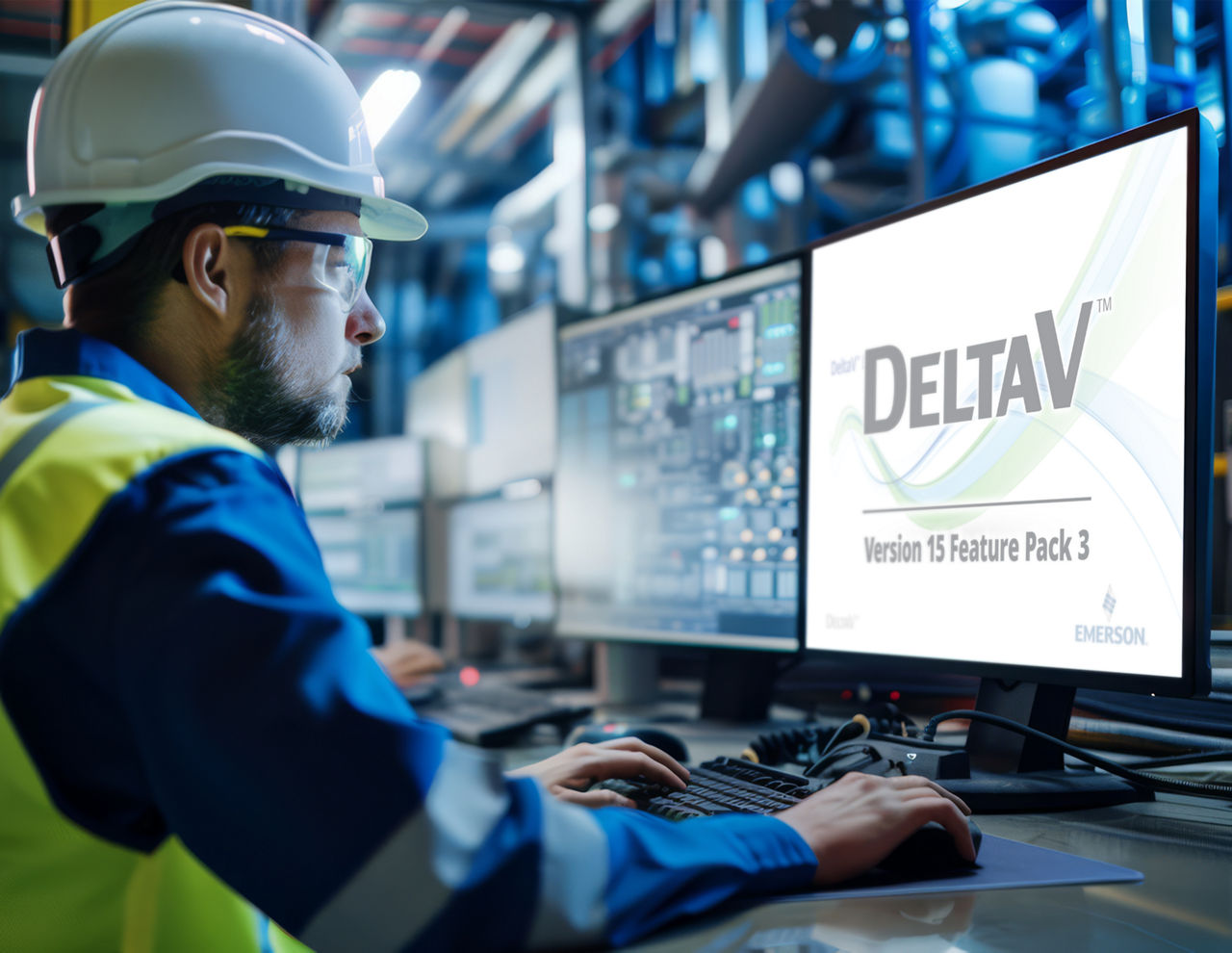
Emerson has launched its DeltaV Automation Platform for Data Centres, bringing thermal, mechanical and electrical systems under a unified control architecture as operators race to commission increasingly large AI facilities.
The company is positioning DeltaV as an industrial-grade automation layer for AI-scale data centres, where rapidly changing loads, liquid cooling and compressed construction schedules are increasing the complexity of facility operations.
Unified Control Targets AI Infrastructure Complexity
Modern data centres increasingly depend on interconnected cooling, electrical and mechanical systems rather than standalone equipment.
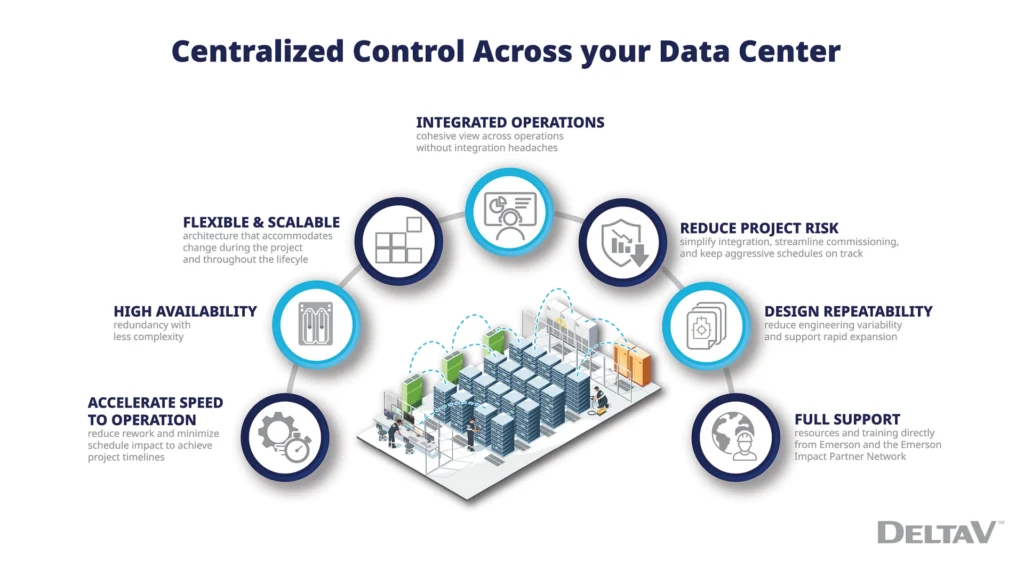
Emerson’s platform combines those infrastructure layers into a single environment designed to provide operators with facility-wide monitoring, coordinated control and real-time operational visibility.
This becomes more important as gigawatt-scale AI facilities introduce substantially more equipment and higher rack power densities.
“AI data centres are pushing at the very limits of scale, speed and complexity, exposing the limitations of piecemeal automation architectures” said Nathan Pettus, President of Emerson’s Process Systems and Solutions business.
Platform Responds to Variable AI Loads
AI workloads can change quickly as GPU utilisation moves between training, inference and idle periods.
Those changes directly affect electricity consumption and cooling requirements.
DeltaV is designed to coordinate equipment-level and facility-wide responses as thermal loads change, allowing cooling and supporting infrastructure to operate as an integrated system instead of several separate control environments.
Emerson says unified automation can also reduce engineering effort and integration complexity during commissioning.
Faster Deployment Becomes Commercial Priority
Time-to-compute has become a major competitive metric for AI infrastructure developers.
A delayed facility represents computing hardware that cannot generate revenue, making construction sequencing, systems integration and commissioning increasingly important.
Emerson is applying automation experience developed in complex industrial environments to that problem.
Its approach includes standardised architectures intended to help operators reproduce successful designs across multiple sites and geographies.
Automation Becomes Core Data Centre Infrastructure
The significance of DeltaV is that facility automation is moving closer to the centre of AI data centre design.
Cooling, power distribution and mechanical infrastructure can no longer be managed as independent support layers when clusters reach hyperscale dimensions.
Instead, operators increasingly need coordinated systems capable of responding dynamically to computing demand.
Emerson’s entry into the market therefore reflects a broader shift: as AI campuses become more industrial in scale, technologies traditionally associated with process plants and heavy industry are becoming relevant to digital infrastructure.