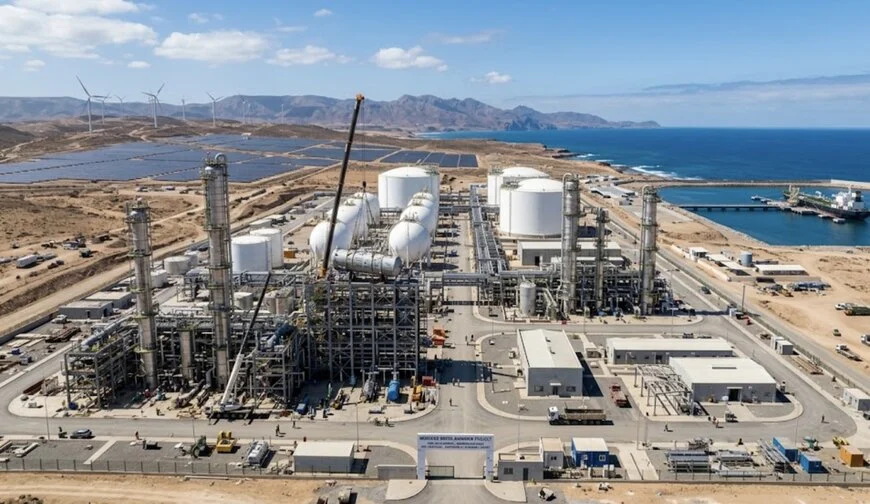
KBR has been selected to carry out pre-front-end engineering design work for a major green hydrogen and ammonia project in Laâyoune, Morocco, advancing a development planned around approximately 900MW of electrolyser capacity.
The ORNX-led project ultimately targets production of around 560,000 tonnes of low-cost ammonia annually, supported by more than 2GW of renewable generation and US Government-backed early engineering funding
US Funding Supports Early Engineering
The US Trade and Development Agency is supporting the development’s engineering programme.
USTDA has committed about US$5.7 million to early project work and has been helping bring technology companies into the development.
KBR says it helped ORNX secure support for the pre-FEED programme.
The engineering stage is critical because it will define the technical configuration, production economics and integration between renewable electricity, electrolysis and ammonia synthesis.
Morocco Targets Export-Scale Green Molecules
The proposed Laâyoune development fits within Morocco’s broader effort to establish itself as a large-scale producer of green hydrogen derivatives.
The country’s strategy targets around 6GW of dedicated renewable capacity by 2030 for green-hydrogen production serving domestic and export markets.
Morocco has also been allocating significant land areas and approving multi-billion-dollar green-molecule developments to attract international capital and technology providers.
“We are very grateful to KBR for its considerable support in working with USTDA to reach this important milestone for our ammonia project in Laayoune” said Peter A. Gish, President and CEO of ORNX. “This funding will ensure the successful completion of the pre-FEED studies lead by world-renown KBR, together with a consortium which includes GE Vernova, Electric Hydrogen and Terabase. We look forward to working closely with our partners as we accelerate towards the FEED and Final Investment Decision for our project.” kbr.com
Ammonia Offers Export Route for Renewable Power
Green ammonia provides a way to convert renewable electricity into a transportable commodity.
Instead of exporting electrons directly, wind and solar power can drive electrolysers to produce hydrogen, which is then converted into ammonia for shipping to international markets.
At 900MW of electrolysis and 560,000 tonnes of targeted annual output, ORNX’s project would operate at a scale capable of serving industrial or energy buyers beyond Morocco.
The move into pre-FEED therefore represents an important step between concept development and detailed engineering.
If the project proceeds toward financing and construction, it could become a significant component of North Africa’s emerging green hydrogen and ammonia export industry, linking abundant renewable resources with European and international demand.