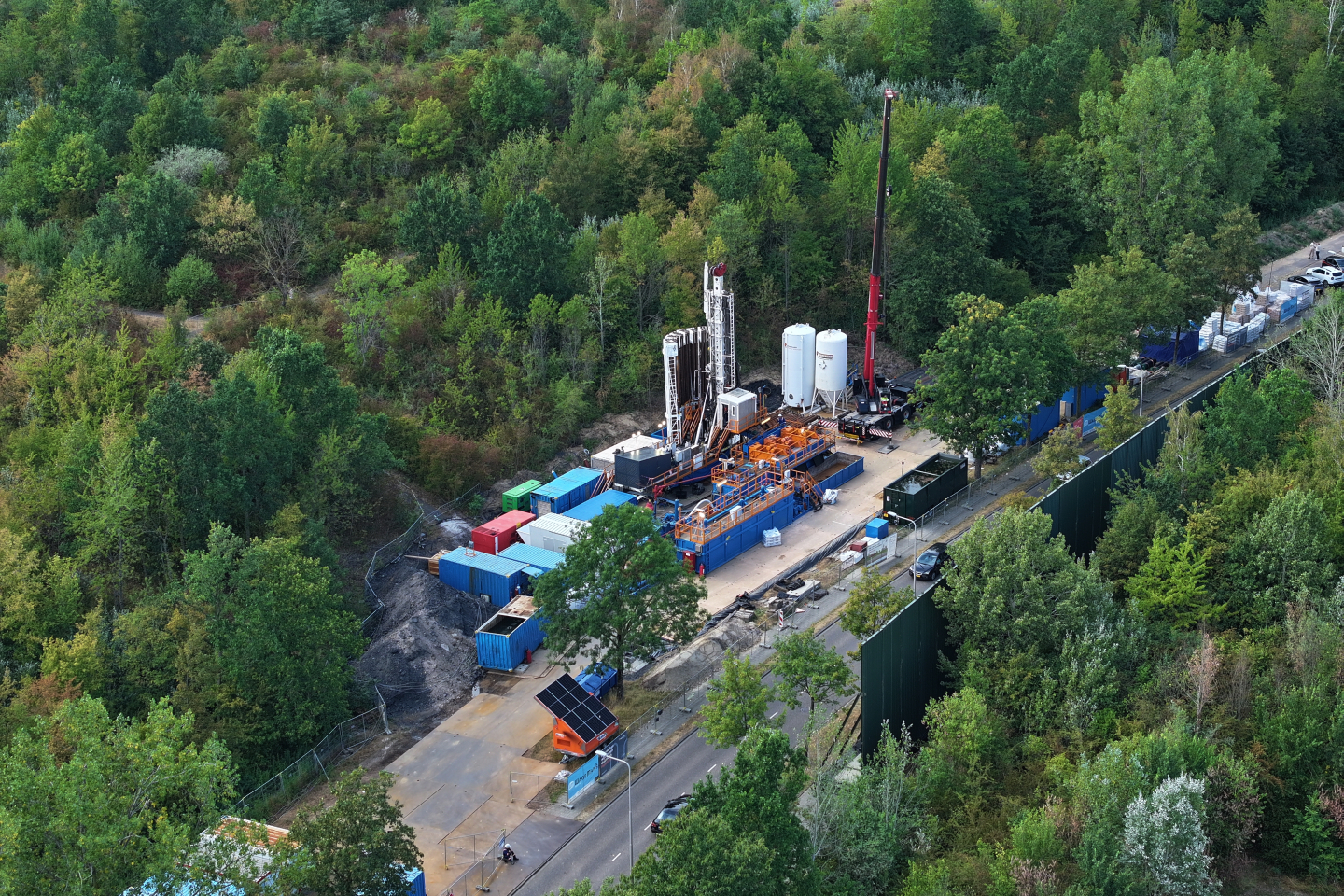
Mijnwater is drilling a new warm-water source in Heerlen, the Netherlands, expanding a fifth-generation heating and cooling network that reuses flooded underground workings from the region’s former coal industry.
The Terhoevenderweg well is designed to reach approximately 634 metres below ground, where a former mine passage contains groundwater at about 28°C. Once completed, the source will become Mijnwater’s fourth warm source and increase the amount of renewable thermal energy available to customers across the Parkstad region.
New Source Targets 28°C Water at 634 Metres
Mijnwater expects the drilling operation itself to run for roughly three to four weeks, with work taking place continuously to complete the bore efficiently and safely.
The project also includes a technical building and connecting pipework so the new source can feed directly into Mijnwater’s existing network.
Former Coal Infrastructure Becomes a Renewable Heat Asset
After coal mines in South Limburg closed, underground galleries gradually filled with groundwater. Water stored at different depths reached different temperatures, creating warm and cool reservoirs that can be incorporated into district-energy systems.
Mijnwater has spent years developing this resource into an operating network rather than treating the abandoned mines as unusable legacy infrastructure. Warm water can support heating, while cooler underground sources can support cooling. Heat pumps and local energy stations raise or lower temperatures depending on the needs of connected buildings.
The fifth-generation model also allows customers to exchange heat. Surplus thermal energy from one building can be transferred through the network and used by another customer instead of being rejected to the environment.
Network Expansion Follows Growing Customer Demand
The Terhoevenderweg source forms part of a wider expansion of Mijnwater’s backbone network in Heerlen and Parkstad. Additional sources and pipes allow more homes, offices, schools, shops and businesses to connect without overloading existing thermal capacity.
This incremental approach differs from a single large geothermal plant. Mijnwater can add new sources as demand grows, gradually expanding the physical network while using the same underlying mine-water resource.
Mine-Water Source Expands Heerlen’s Heating Network
Mine-water systems show how geothermal energy can be deployed at moderate temperatures and relatively shallow depths compared with conventional deep geothermal wells.
The project also creates a direct energy-transition link between the region’s industrial past and its low-carbon future. Infrastructure that once supported fossil-fuel extraction is now being reused to provide renewable heating and cooling.
For other European mining regions, Heerlen provides a real-world example of how abandoned underground workings can become long-lived thermal assets when geology, customer density and heat-network infrastructure align.
Drilling and Network Integration Define the Next Phase
After drilling reaches the mine passage, Mijnwater will complete the well, construct the technical installation and lay the pipework required to connect the source to the network.
The key operational milestone will be confirming sustainable water flow close to the expected 240m³ per hour and integrating the new source without disrupting existing customers. Once commissioned, it will support further growth of the Parkstad heating and cooling network.