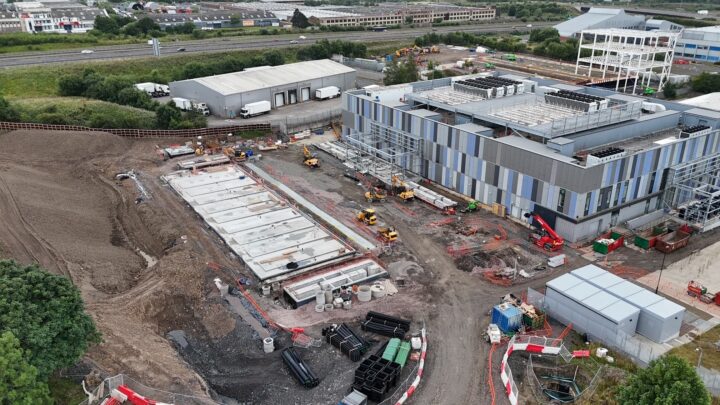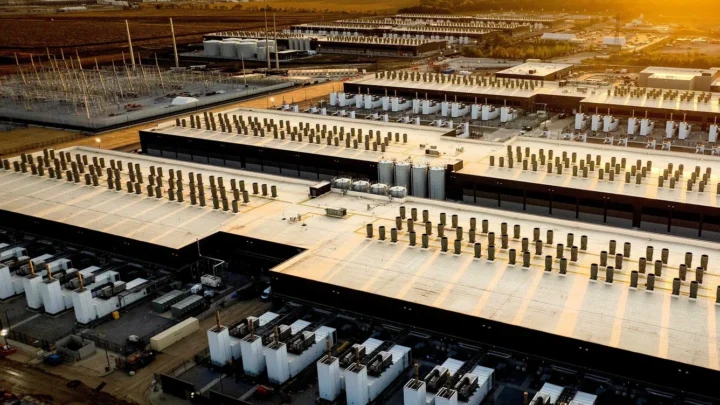
HD Hyundai Heavy Industries has secured a US$673.8 million contract to supply 1,000MW of power-generation systems for data centres in the United States. The agreement with Corban Energy Group is the largest power-generation engine order in the company’s history and highlights how access to electricity is becoming central to AI infrastructure development.
The systems will use HD Hyundai’s 9.6MW HiMSEN engines and are intended to support facilities operated by an unnamed major US technology company. Unlike conventional standby generators, the units are designed for continuous 24/7 operation, positioning them as part of the primary power architecture for large computing campuses.
A record 1GW HiMSEN order
The order represents a major expansion of HD Hyundai’s land-based power business. Its disclosed scale includes:
- US$673.8 million in contract value
- 1,000MW of combined generation capacity
- 9.6MW high-capacity HiMSEN engines
- Continuous operating capability for power-intensive facilities
- Deployment for US data centre infrastructure
The latest award follows a separate US$425 million agreement with AEG announced in April. Together, the two contracts indicate that the company is building a sizeable position in a market shaped by fast-rising electricity demand from AI training, inference and cloud workloads.
AI growth increases demand for on-site generation

Large AI campuses can require hundreds of megawatts—and increasingly gigawatts—of capacity. Grid-connection queues, transmission constraints and long utility upgrade schedules can delay projects even when land and construction financing are available.
That pressure is encouraging developers to examine on-site and behind-the-meter generation alongside conventional utility supply. HiMSEN engines are being positioned for this role through high output, operational reliability and the ability to run continuously.
An HD Hyundai Heavy Industries official said: “The steady stream of collaboration inquiries we are receiving in the data centre power generation engine market demonstrates the market recognition of the HiMSEN…”
The development complements the broader shift covered by ENERGYBYT’s Data Centers desk, where power availability, cooling and electrical architecture are becoming as important as computing hardware.
Marine engineering moves into digital infrastructure
HiMSEN engines were developed through HD Hyundai’s marine and heavy-engineering operations. Their use in data centres demonstrates how equipment designed for ships and industrial facilities is being adapted for digital infrastructure that requires resilient, high-density power.
The group’s wider portfolio may also support the expansion. HD Hyundai Electric supplies power-distribution equipment, while HD Hyundai Marine Solution has maintenance capabilities for engine systems. HD Hyundai is also developing concepts related to floating data centres, extending the connection between marine engineering and computing infrastructure.
This cross-sector approach resembles the wider industry move toward integrated systems. ENERGYBYT has also examined grid-conscious computing through its coverage of DIMAAG’s 800V DC architecture.
Why it matters
The contract shows that data centre competition is no longer determined only by processors, software and construction speed. Developers must also secure generation, electrical equipment, fuel supply and long-term operating reliability. A single 1GW order illustrates the scale at which the AI infrastructure market is now influencing conventional power engineering.
For HD Hyundai, data centres could become a significant new market for an established industrial technology. For developers, the availability of modular high-output generation may offer another route to bringing capacity online while broader grid infrastructure catches up.
What happens next
Attention will now turn to the delivery timetable, final project locations and the way the HiMSEN systems are integrated with utility power, backup systems and emissions-management requirements. The identity of the technology customer has not been disclosed.
Future orders will indicate whether this agreement is an exceptional project or the beginning of a repeatable power model for gigawatt-scale US data centres. Regulatory approvals, fuel strategy and operational performance will be important measures as deployment progresses.